A handheld computer designed and built in Lahore, documented through surviving hardware, software, and records.
Lahore, 1999–2000: start with fifty dollars
As work on Sirius began around 1999–2000, a computer was still a major purchase. In July 2000, Apple announced an entry iMac at $799; the same family extended to $1,499. For a school, a small business, or a household trying to obtain its first computer, even the least expensive machine could represent a formidable barrier.
Sirius began with a different target: bring the price down to $50. That number changed the design from the start. The screen, keyboard, processors, circuit board, case, and assembly method all had to serve it. The aim was a useful handheld that could be built in small quantities in Lahore, with a supply chain and workshop within reach of its makers.
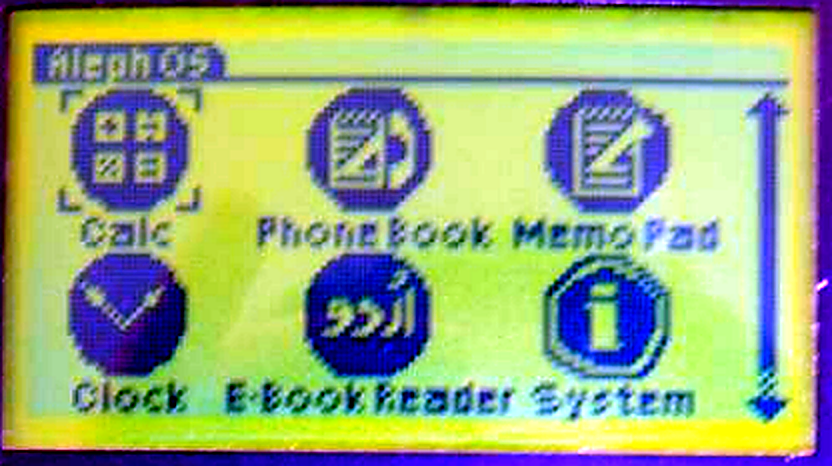
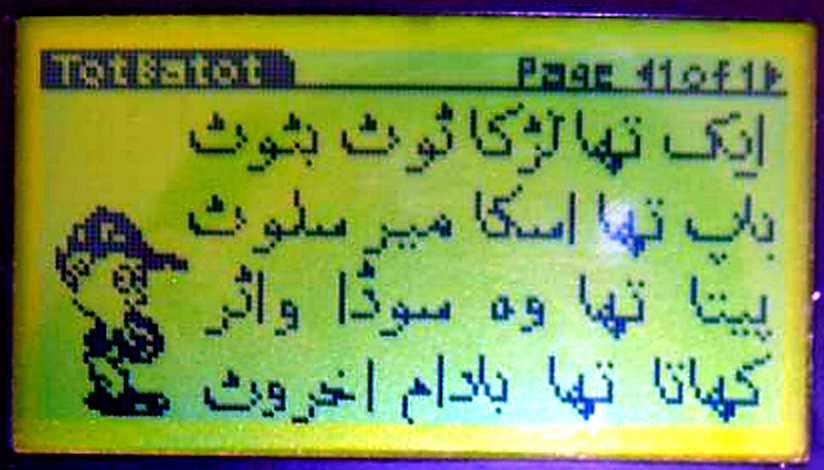
The later prototypes and software grew from that early work. Amir Husain conceived and developed the system with his team; AlephOS supplied its operating environment. An address book, calculator, notes, order entry, and Urdu and English reading made a small screen useful. The surviving record follows the idea through prototypes, application development, and the handover of a Sirius to the Computer History Museum in 2013.
Three inexpensive processors, one carefully divided job
A single more powerful processor would also have needed a suitable display interface, input handling, development tools, and parts that could be sourced and assembled. Sirius divided the work across three inexpensive 8051-family controllers. One ran the applications, one drove graphics, and one handled the keyboard and feedback. Their cooperation bought useful responsiveness from modest components.
The keyboard was assembled from individual switches on a board. A mechanical switch can make and break contact several times during one press; this is contact bounce. The keyboard controller scanned the matrix and debounced the switches so that one deliberate press became one key event. Software and a small controller took on work that might otherwise have demanded a more expensive keyboard assembly.
The 128 × 64 monochrome display was equally consequential. Its entire image occupied 1,024 bytes. A ready-made graphics LCD module supplied the panel and its controllers; the separate display processor translated drawing commands into the panel’s timing and memory layout. The small pixel budget reduced hardware cost and made the design of every menu, glyph, and reading screen matter.
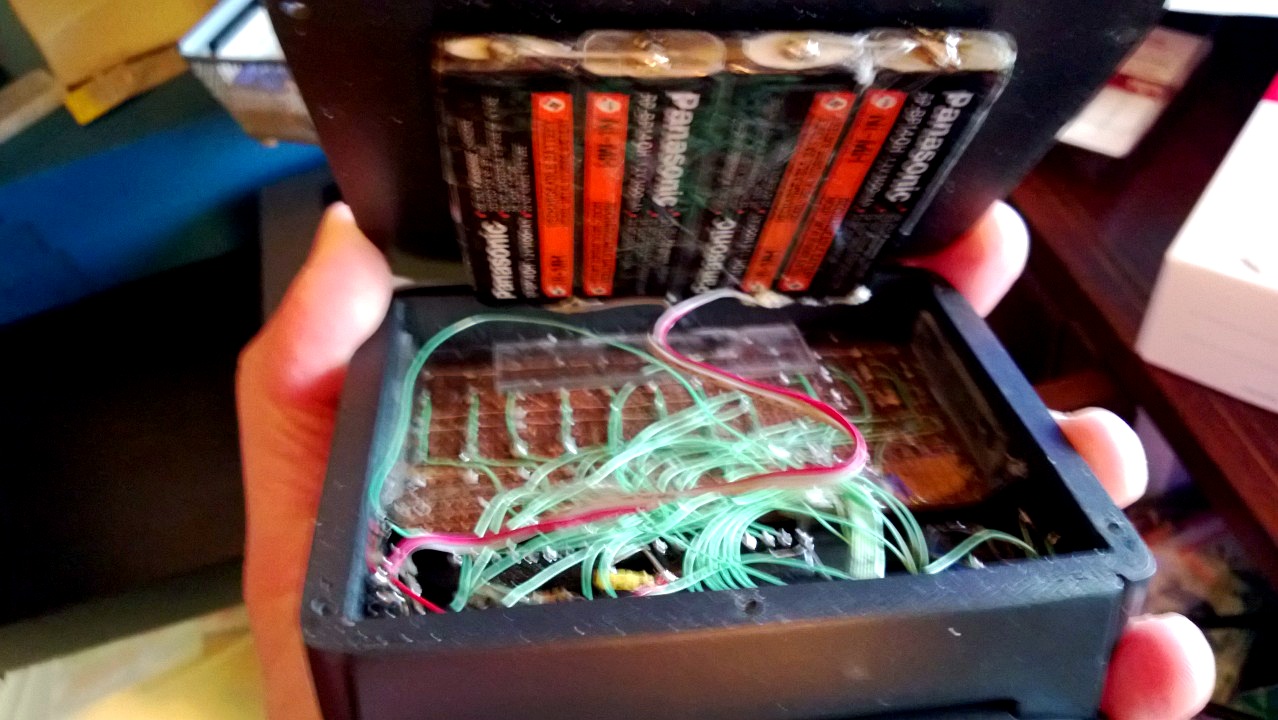
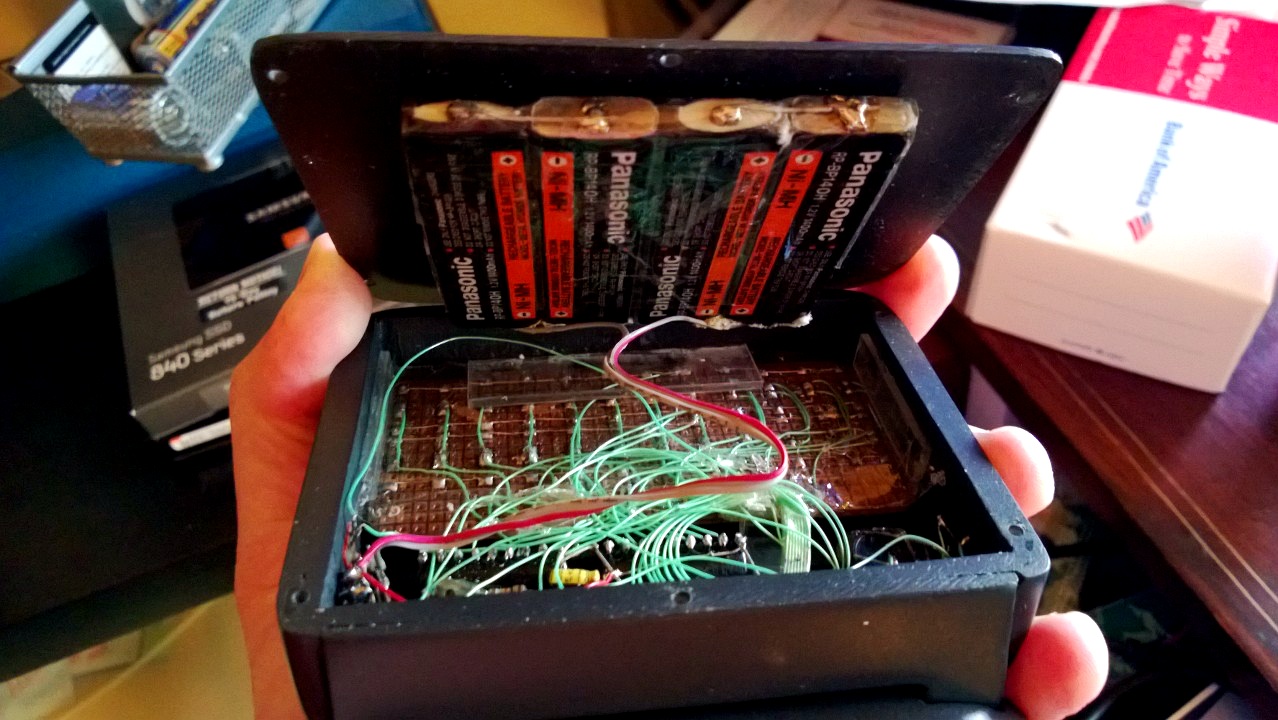
Hand-solderable components and accessible connections kept assembly possible at a bench. The opened prototype makes that choice visible: switches, batteries, boards, and wiring that a small team could assemble, inspect, and repair. Avoiding the tooling and production commitments of a mass-market handheld helped make an initial run possible. The design treated manufacturing scale as an engineering constraint from the first circuit onward.
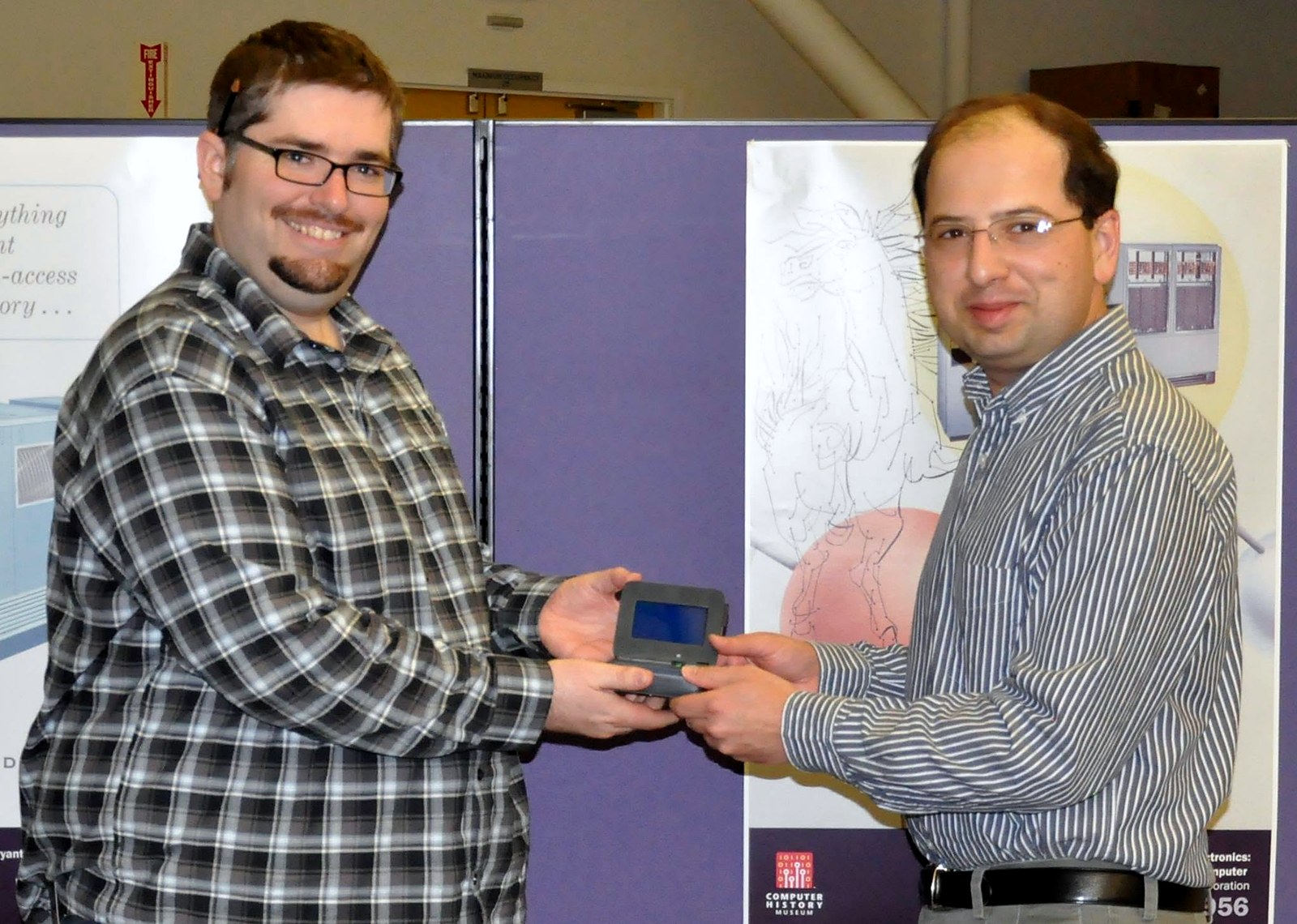
Handover photograph retained from the collection archive.
The object and its record
Amir Husain conceived Sirius and developed it with his team in Lahore. The Computer History Museum accessioned a Sirius handheld in 2013, crediting Husain as its donor.
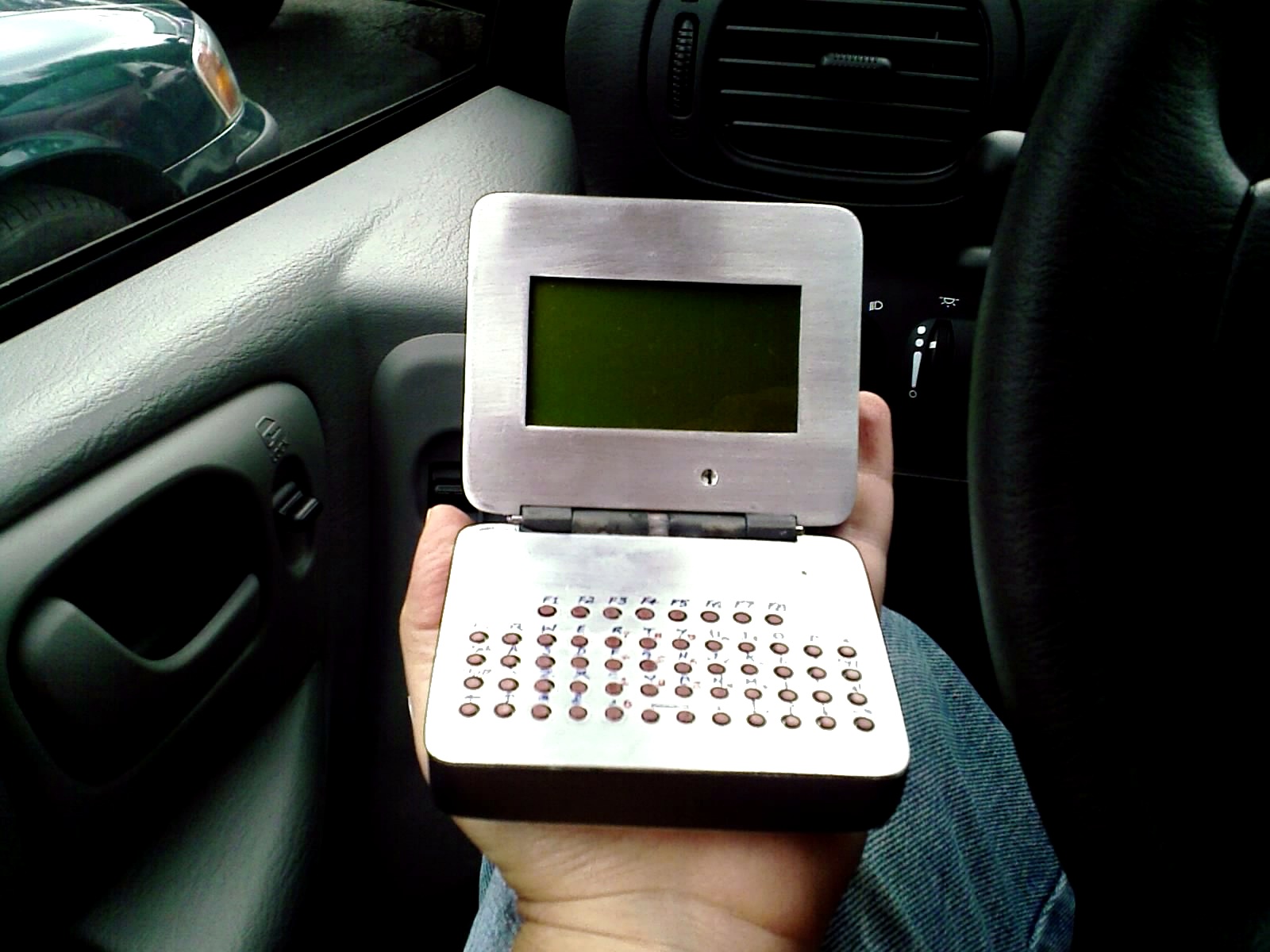
The surviving machines tell different parts of the story: a silver-front unit shown as a complete handheld, and a hand-soldered early prototype opened to reveal its batteries, wiring, and improvised construction.
Prototype B · silver front. A second Sirius prototype, photographed as a working handheld with its display and keyboard visible.
Prototype A · opened. Hand-soldered construction and the battery pack inside the enclosure.A second view of the same early prototype, showing the dense point-to-point wiring.
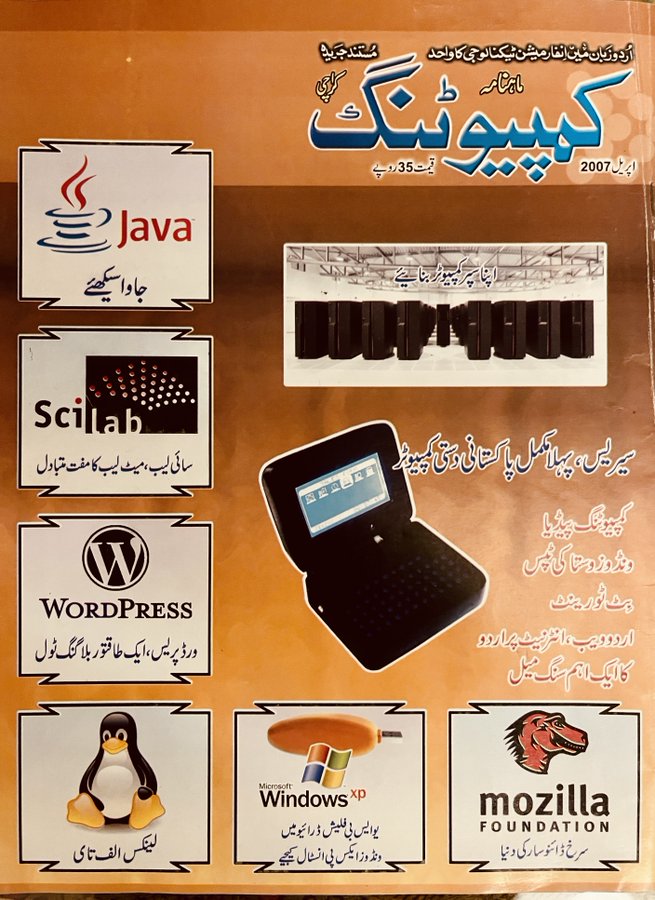
A contemporary Urdu computing magazine cover featuring Sirius. Supplied from the collection archive.
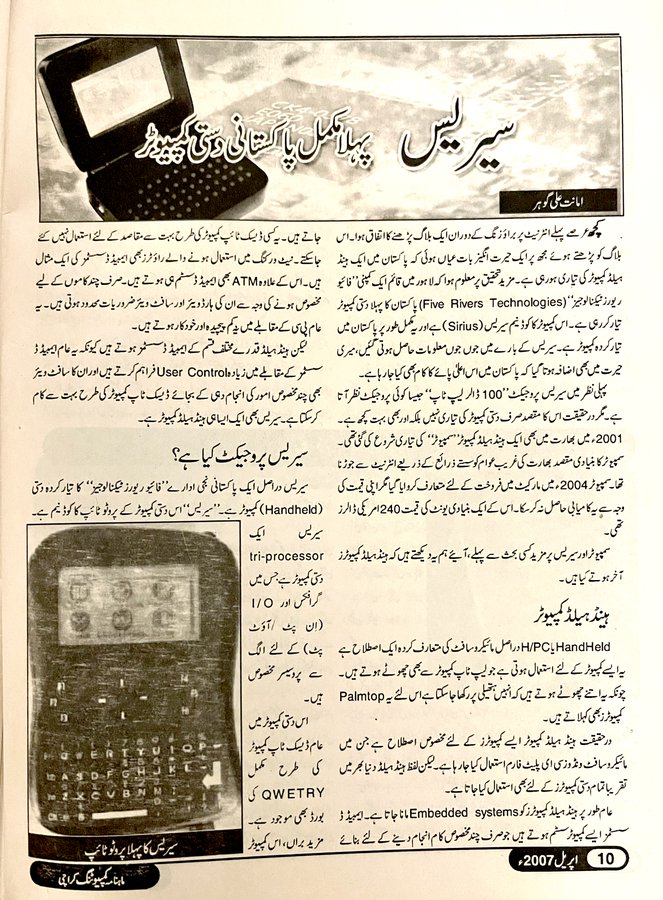
A contemporary Urdu article describing Sirius and its development. Supplied from the collection archive.
A contemporary account
Amir Husain described Sirius as designed and built from scratch, including an operating system called AlephOS written in C. Development boards were distributed to universities and colleges, where students wrote software for the platform. The account also notes that a Sirius prototype is held by the Computer History Museum.
“Not only was the computer designed and built from scratch, the operating system was also written from the ground up. We called the operating system AlephOS, and it was written in C.”
Amir Husain, archived post, supplied with the collection
The recovered archive includes firmware, PC synchronization software, simulated MMC cards, Urdu and English interface screens, and PCB design files.
Sirius at Work
Phonebook, order form, Urdu and English ebook readers, notepad, calculator, and more, running on Sirius.
Live hardware-level emulation running AlephOS 2.0 in your browser, with an in-depth analysis of delivering text, graphics, and Urdu scripts on a 1-bit display.
This retrospective engineering estimate expresses the design in nominal dollars of the development era. It assumes low-cost parts sourcing and circuit boards shared across a small production batch. The ranges are an estimated parts budget, not recovered purchase invoices.
Estimated Sirius bill of materials · US dollars, circa 1999–2003
Part or assembly
Quantity
Extended cost
Purpose
Three 8051-family controllers
3
$9–15
Application, display, and keyboard controllers
128 × 64 graphics LCD module
1
$8–14
Panel and integrated display drivers
Tactile switches and keyboard labels
1 set
$2–4
Approximately 40–50 inexpensive switches; prototype layouts vary
Printed circuit boards
1 set
$3–6
Main and keyboard boards, allocated per unit in a small batch
Clock crystals and load capacitors
1 set
$0.75–1.50
Processor timing
RTC, watch crystal, backup supply
1 set
$1–2
Clock and timekeeping
Serial level shifter and capacitors
1 set
$0.50–1.25
PC synchronization interface
Glue logic, sockets, headers, connectors
1 set
$1.50–3
Bus connections and assembly
Regulation, protection, passives, piezo
1 set
$1.50–3
Power conditioning, pull-ups, decoupling, feedback
Battery holder, contacts, initial cells
1 set
$1.50–3
Portable power
Simple enclosure, fasteners, wiring
1 set
$2–4
Bench-assembled housing
Card socket
1
$0.50–1.25
Removable storage interface
MMC storage card
Optional
$5–15
Capacity and procurement strongly affect cost
Core hardware, excluding removable card
$31.25–58.00
Hardware with removable card
$36.25–73.00
The processor flash and internal RAM are included in the controller prices; the LCD module includes display memory. The spread shows why sourcing mattered. At the lower end, parts left room under fifty dollars; at the upper end, they already exceeded the goal. Assembly time, testing, rejected boards, development, tools, freight, taxes, packaging, and selling margin would add to the finished price. The $50 figure describes the ambition that disciplined the design.
Small quantities made hand assembly valuable, but also made parts harder to buy cheaply. The switch keyboard, compact LCD, and three-controller division of work are the visible answers to that tension.